- Published on
Reflective Teaching: Your Ultimate Guide to Strategies, Benefits, and Implementation
Reflective Teaching: Your Ultimate Guide to Strategies, Benefits, and Implementation
Searches for "reflective teaching" primarily indicate an informational intent, with users—such as educators, teacher trainees, school leaders, or professional developers—seeking definitions, methods, examples, and practical strategies for reflective teaching to improve classroom practice. Based on web data, this keyword reflects a demand for resources on self-assessment techniques like journaling, peer feedback, and video analysis, often for professional growth, enhancing student outcomes, or aligning with teaching standards in K-12 or higher education.
Whether you're a novice teacher starting a reflective practice or an experienced educator refining your methods, this guide provides comprehensive insights, strategies, and resources to help you become a more effective instructor.
What Is Reflective Teaching?
Reflective teaching is a systematic process where educators examine their teaching practices, beliefs, and outcomes to improve future instruction. It involves collecting data through journals, feedback, or observations, analyzing it, and making adjustments for better student engagement and learning. Originating from theories by John Dewey and Donald Schön, reflective teaching encourages continuous professional growth, turning experiences into actionable insights.
Unlike traditional teaching, it focuses on self-evaluation to adapt to diverse student needs and evolving educational demands.
Key Strategies for Reflective Teaching
Effective reflective teaching involves various strategies to gather and analyze insights:
Journaling: Record daily thoughts on lessons, student responses, and improvements.
Peer Observation: Invite colleagues to observe and provide feedback.
Student Feedback: Use surveys or exit slips to gauge effectiveness.
Video Recording: Review taped lessons to self-assess delivery and engagement.
Reflection Surveys: Structured questionnaires to evaluate alignment with goals.
These methods promote mindful teaching and continuous improvement.
Effective Strategies for Reflective Teaching Practice
How to Implement Reflective Teaching in Your Practice
Implementing reflective teaching follows a cyclical process:
- Plan: Set clear goals for lessons and anticipate challenges.
- Act: Deliver instruction and collect data through observations or journals.
- Observe: Analyze what worked and what didn't.
- Reflect: Consider why outcomes occurred and plan adjustments.
- Apply: Incorporate insights into future teaching.
Use frameworks like Gibbs' Reflective Cycle or tools like reflective journals for structure.
Benefits of Reflective Teaching
Reflective teaching leads to improved student outcomes, enhanced teaching effectiveness, and professional growth. It helps identify biases, adapt to diverse needs, and foster innovation, resulting in more engaging lessons and better classroom management. Research shows it boosts teacher satisfaction and retention.
Understanding the Impact of Reflective Teaching
FAQ: Common Questions About Reflective Teaching
This Q&A addresses frequent queries based on search trends for "reflective teaching."
What is reflective teaching?
Reflective teaching is the process of examining teaching practices, outcomes, and beliefs to improve instruction and student learning.
What are examples of reflective teaching methods?
Examples include keeping a reflective journal, videotaping lessons, using student feedback surveys, and peer observations.
Why is reflective teaching important?
It promotes continuous improvement, adapts to student needs, and enhances teaching effectiveness, leading to better learning outcomes.
How can I start reflective teaching?
Begin with simple methods like journaling or student surveys, then progress to video analysis or peer feedback for deeper insights.
What resources are available for reflective teaching?
Resources include infographics on reflection methods and videos explaining the process for teachers.
Additional Resources for Reflective Teaching
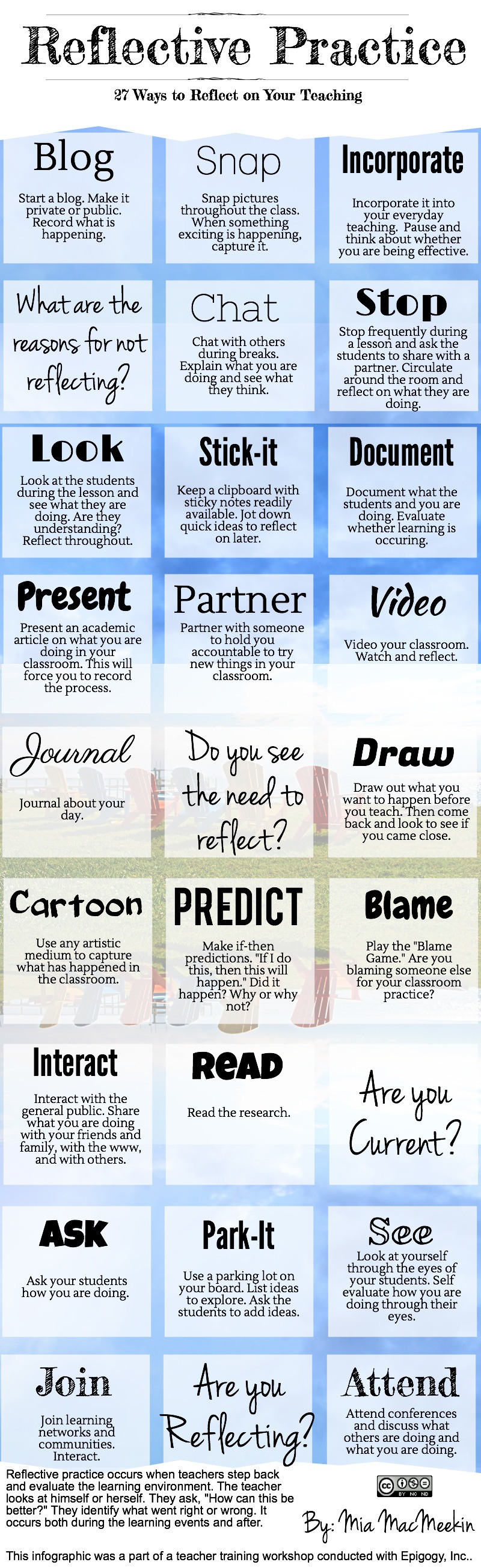
Visual Guide to Reflective Teaching Practices
Conclusion: Elevate Your Practice with Reflective Teaching
Reflective teaching is a powerful tool for professional growth and student success. By adopting its strategies, educators can create more impactful classrooms. Explore the resources and videos above to begin your reflective journey. For an introductory overview, watch the embedded videos for comprehensive guidance on implementing reflective practices in your teaching.
Getting Started with Reflective Teaching Practice